Explore Balearic Islands
Island living across Mallorca, Menorca, Ibiza and Formentera.
AI-powered. Describe your dream location or tap the mic to speak.
About Balearic Islands
Four islands in the Mediterranean, and the thing that first separates them from the Spanish mainland is the summer. On AEMET's 1981 to 2010 normals a typical August afternoon reaches 35.5 degrees at the Sevilla station; at Palma it is 31.3, on Ibiza 30.3 and on Menorca 29.2. That is four degrees at Palma and more than six at Menorca.
Two rules cut the running costs wherever you buy out here. Spanish law fixes island electricity prices at peninsular levels, so power is not charged at an island premium, and anyone registered as resident pays a quarter of the regular air and sea fare to the rest of Spain, a discount set with no end date. On health, Menorca, Ibiza and Formentera are each named a reference hospital of their own; Mallorca spans four health sectors, with the community's referral hospital, Son Espases, in Palma.
Demand is unlike the mainland's too. In the last quarter of 2025 foreign buyers took close to a third of all homes sold across the islands, the highest share of any Spanish region and more than twice the national figure. Five of the eight entries on this page carry an asking price, and Formentera's is the highest of any place priced on this site.
What to know first
- August afternoons run four to six and a half degrees under Sevilla's
- Foreign buyers took close to a third of Balearic sales in late 2025
- Island electricity is priced at mainland levels by law
- Registered residents pay a quarter of the regular fare to the peninsula
- Menorca, Ibiza and Formentera are each named a reference hospital
- Prices are published by municipality and not by island, so three carry none
Asking prices compared
Ranked on asking price per m². Municipalities and sub-municipal entries are listed apart, because a district cannot be ranked against the municipality that contains it.
| Place | Asking price / m² | Population | Price tier |
|---|---|---|---|
| Whole municipalities | |||
| Formentera | 9.708 €/m² | 11.690 | Premium |
| Sóller | 5.791 €/m² | 13.996 | Premium |
| Palma de Mallorca | 5.540 €/m² | 443.196 | Premium |
| Pollença | 5.202 €/m² | 17.801 | Premium |
| Alcúdia | 4.827 €/m² | 22.459 | Premium |
| Islands | |||
| Ibiza Island, Balearic Islands | Not priced | 164.265 | No data |
| Mallorca Island, Balearic Islands | Not priced | 971.068 | No data |
| Menorca Island, Balearic Islands | Not priced | 102.821 | No data |
How the prices spread
Five of the eight entries here carry an asking price, and about twice separates the ends. Formentera asks the most, then Soller, then Palma de Mallorca, then Pollenca, with Alcudia at the bottom. All five carry a July 2026 reference month.
Formentera is worth stating plainly: it asks more per square metre than any place priced anywhere on this site. It is also the only priced entry here that is a whole island, and it is priced as one only because the island is a single municipality, so the two figures coincide. The other four priced entries are municipalities of Mallorca.
Palma de Mallorca is the outlier among those four, and the useful one. It has more than four hundred thousand residents where none of the other three reaches twenty-three thousand, and thirteen of the sixteen districts listed for it carry their own price. Alcudia and Pollenca price their districts too, but Palma has much the most of them and much the widest spread between them, better than two to one.
The three islands with no figure at all are Mallorca, Menorca and Ibiza, and the reason is worth knowing before you go looking. Asking prices are published by municipality and not by island, so no figure exists for any of the three as a unit. Below island level the detail is there: all five Ibizan municipalities carry a price and six of Menorca's eight do, including Ciutadella and Mao. Every figure here is an asking price rather than a sale price.
Who each part suits
Buyers who find the mainland south too hot
A typical August afternoon averages 29.2 degrees on Menorca and 30.3 on Ibiza, against 35.5 at the Sevilla station on the same normals. Menorca is the coolest of the three in August and the coolest again in January.
Buyers who want a city, not a resort
More than four hundred thousand residents against under twenty-three thousand in the other Mallorcan entries, thirteen priced districts to compare, and the community's referral hospital in the city. It is the airport Aena names for Palma, and the rail and metro lines start here.
Buyers looking at Ibiza
Its seven Blue Flag beaches are all in Sant Joan de Labritja and Santa Eularia des Riu, and its nightlife concentrates in Sant Antoni's West End, the Marina in Eivissa and Platja d'en Bossa. All five Ibizan municipalities carry a price.
Buyers who want a mountain valley or a northern town
Soller is a valley town in the Serra de Tramuntana, the UNESCO landscape along Mallorca's north-west, and more than a quarter of its residents were born abroad. Pollenca prices its inland and port districts separately, and British nationals are the largest foreign nationality recorded there.
Buyers who want the island question answered simply
Formentera is one island, one town hall, one reference hospital on its own territory and one price. Menorca is one health sector with its reference hospital at Mateu Orfila in Mao, and six of its eight municipalities carry a published price.
Cities in Balearic Islands
Browse properties by city
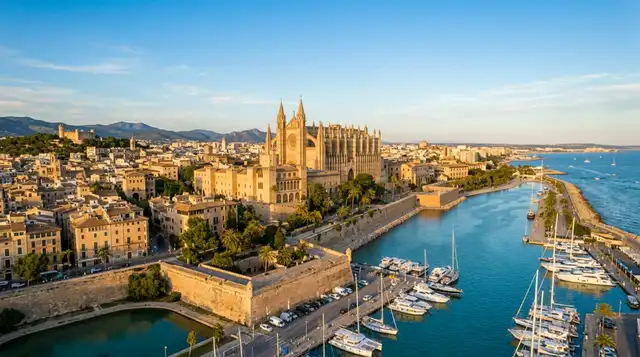
Mallorca
Balearic Islands
Population 971.068
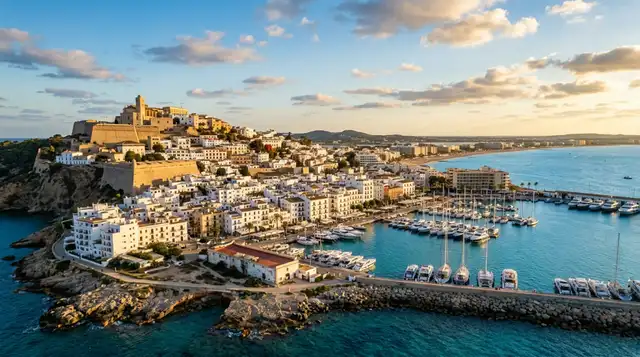
Ibiza
Balearic Islands
Population 164.265
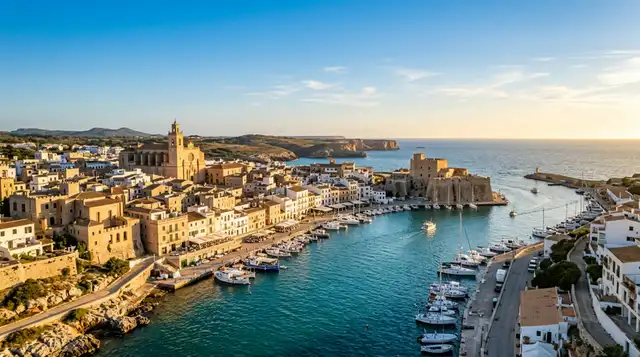
Menorca
Balearic Islands
Population 102.821
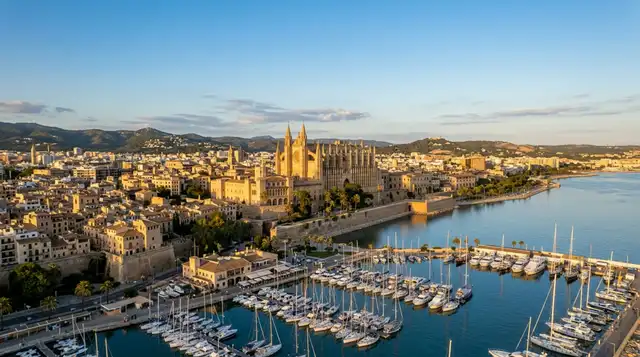
Palma de Mallorca
Balearic Islands
5.540 €/m² · Population 443.196
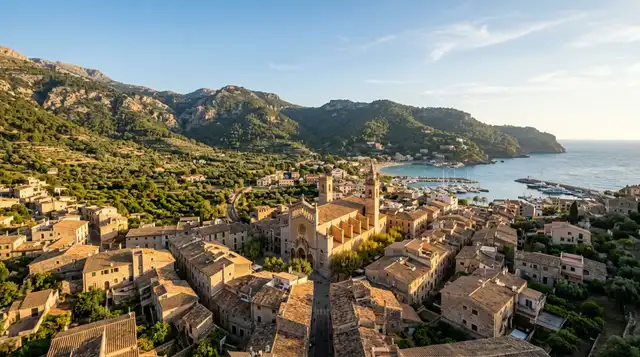
Sóller
Balearic Islands
5.791 €/m² · Population 13.996
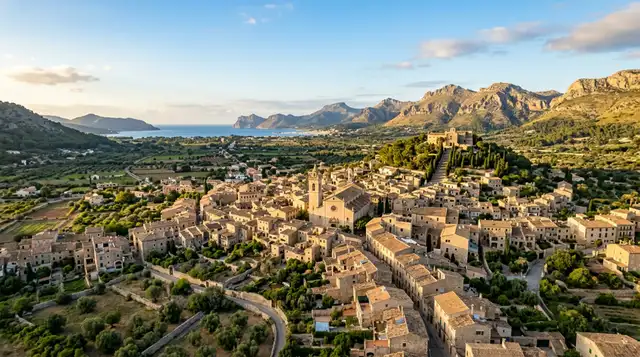
Pollença
Balearic Islands
5.202 €/m² · Population 17.801
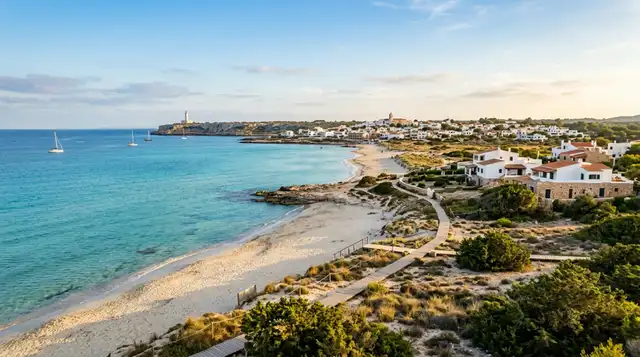
Formentera
Balearic Islands
9.708 €/m² · Population 11.690
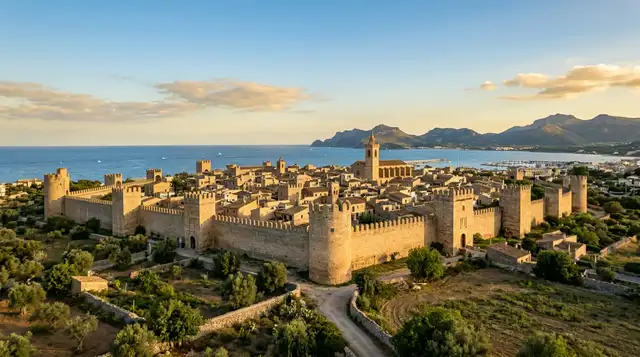
Alcúdia
Balearic Islands
4.827 €/m² · Population 22.459
The case for
- Summer afternoons are cooler than the mainland south
On AEMET's 1981 to 2010 normals a typical August afternoon reaches 35.5 degrees at the Sevilla station, against 31.3 at the Palma airport station, 30.3 on Ibiza and 29.2 on Menorca. That is four degrees cooler at Palma and more than six at Menorca.
- The most internationally bought region in Spain
In the last quarter of 2025 foreign buyers took close to a third of every home sold across the islands, the highest share of any Spanish region and more than twice the national figure. It is a market built around people arriving from somewhere else.
- Island rules that cut the cost of living here
Spanish law fixes island electricity prices at peninsular levels, so power out here is not charged at an island premium. And anyone registered as resident pays a quarter of the regular air and sea fare to the rest of Spain, a discount set with no end date.
- A reference hospital named for three of the four
The health service names Mateu Orfila in Mao for Menorca, Can Misses in Eivissa for Ibiza and Hospital de Formentera for Formentera. Mallorca spans four sectors, and Son Espases in Palma is the referral hospital for the whole community.
- A UNESCO cultural landscape and protected land
The Serra de Tramuntana was inscribed in 2011 for its dry-stone terracing and a water system of qanats, canals and storage basins built over a millennium. Natura 2000 covers more than a quarter of Mallorca's land.
The case against
- No island-level price for three of the four
Mallorca, Menorca and Ibiza carry no asking price as islands, because prices are published by municipality rather than by island. You cannot rank the islands against each other on price, and no substitute figure exists on this basis.
- The dearest entry is also the smallest
Formentera asks more per square metre than any place priced on this site and has fewer than twelve thousand residents. It has no district prices either, so the municipal figure is the only granularity it has.
- Ibiza's Blue Flags are not spread around
All seven sit in Sant Joan de Labritja and Santa Eularia des Riu; the island's three other municipalities have none. Of thirty-eight monitored bathing zones none was graded poor in 2025, but fewer reached excellent than across the islands as a whole.
- Four of the five priced entries are one island
Soller, Palma de Mallorca, Pollenca and Alcudia are all Mallorcan municipalities, so the range you can actually see here is one island's municipalities plus Formentera, rather than a spread across the archipelago.
- Competition for what comes up is heavy
Foreign buyers took close to a third of all homes sold across the islands in the last quarter of 2025, the highest share of any Spanish region and more than twice the national figure. You are bidding into that.
Questions buyers ask
- Why is there no price for Mallorca, Menorca or Ibiza?
- Because asking prices are published by municipality and not by island. The July 2026 report gives a figure for each municipality it covers and none for an island as a unit, so there is nothing to show for the three of them. That is how the data is published rather than a gap in what was checked, and below island level the coverage is good: all five Ibizan municipalities carry a price and six of Menorca's eight do.
- Then why does Formentera have one?
- Because Formentera is a single municipality, so its municipal asking price is also its island price. It is the only entry here where the island-level question has an answer, and it has one by an accident of administrative geography rather than because more work went into it. The same simplicity runs through the rest of the island: one town hall, and a reference hospital on the island itself rather than in another sector.
- How hot does it actually get in summer?
- Warm rather than punishing, and measurably cooler than southern Spain. On AEMET's 1981 to 2010 normals a typical August afternoon averages 31.3 degrees at the Palma airport station, 30.3 on Ibiza and 29.2 on Menorca, against 35.5 at Sevilla. These are averages of daily maxima over thirty years rather than record highs. AEMET's normals publication for principal stations lists four entries for the islands, two of them Palma stations, so Formentera, Soller, Pollenca and Alcudia have no figures of their own and no other island's station is used in their place.
- The Balearics or the Canary Islands?
- On winter warmth the Canaries win, and it is not close. Every Canary row here that carries a January figure records an afternoon above twenty degrees, and no Balearic one reaches sixteen: 15.7 on Ibiza, 15.2 at Palma, 14.1 on Menorca. Those rows also count far fewer days with a millimetre or more of rain. The Balearics answer a different question: a Mediterranean summer running four to six and a half degrees under Sevilla's, and the strongest international demand of any Spanish region. On price it is mixed: of the three Canary places priced here, two ask less than any Balearic entry.
- Is it more expensive to live on the islands?
- Not on two things that usually cost more on an island. Electricity is priced at mainland levels by law, and anyone registered as resident pays a quarter of the regular air and sea fare to the rest of Spain, a discount set with no end date.
- How much competition is there from other foreign buyers?
- A great deal, and it is measured. In the last quarter of 2025 foreign buyers took close to a third of every home sold across the islands, the highest share of any Spanish region and more than twice the national figure. That is a statement about who is buying rather than about who lives here, and it is the single most useful thing to know before setting a budget.
- Can I get around Mallorca without a car?
- Partly, and only there. Three publicly operated rail lines and a metro run out of Palma to Inca, sa Pobla and Manacor, calling at Sineu, Petra and Binissalem, on timetables in force this September with no replacement-bus notice against them. Calvia, Soller, Alcudia, Llucmajor and the airport have no line, and are government projects for 2031 to 2033. Soller has the separate Ferrocarril de Soller, a private heritage railway the operator dates from 1912 with a tram from 1913, but it sits outside the public network and no current timetable was obtained. The transport authority publishes lines for Mallorca only.
- Which is the most expensive place priced here?
- Formentera, and not only among these five. It asks more per square metre than any place priced anywhere on this site, with a clear margin over the next one. Soller comes next, then Palma de Mallorca, then Pollenca, then Alcudia, and about twice separates the top from the bottom. All five carry a July 2026 reference month, so they can be compared without correcting for timing.
Where you might be better off elsewhere
The case for these islands is mostly not a price case. It is a Mediterranean summer that runs four to six and a half degrees under Sevilla's on the same thirty-year normals, electricity charged at mainland rates by law, a quarter fare to the peninsula for residents, and a reference hospital named for Menorca, Ibiza and Formentera. Against the Canaries the honest answer is that every Canary row here that carries a January figure records an afternoon above twenty degrees, where no Balearic one reaches sixteen, and that the Balearics are answering a different question.
On price the format breaks, and it is worth saying once rather than building the page around it. Asking prices are published by municipality and not by island, so Mallorca, Menorca and Ibiza carry no figure of their own here and the four cannot be ranked against each other. What that leaves is five asking prices on one reference month, Formentera at the top of them and of everywhere else priced on this site, and Palma with thirteen of its sixteen districts priced separately.
One number to carry into an offer: close to a third of every home sold across the islands in late 2025 went to a foreign buyer, the highest share in Spain.